
Cornerstone guide
Choosing materials: stainless grades, net polymers and the fixings between them
Most installations fail at the hardware, not the cable or the net. This is how to choose all three so they last together.
- A fit for your opening — measurements, edges and fixing points
- Options for everyday living — view, access and purpose
- Find your local team — city and neighbourhood pages
8 min read · Published · Updated

- Photo estimate on WhatsApp
- Written quotation after survey
- Named material grades
- Eight-state coverage
AISI 304 against 316 stainless steel
Both are austenitic stainless steels and both look identical once installed. The difference is molybdenum, which 316 contains and 304 does not, and which gives 316 markedly better resistance to chloride pitting. In practical terms that means 304 is entirely adequate at an inland address and will begin to show brown pitting within a couple of seasons in salt-laden coastal air.
This single decision is the clearest example of why location matters more than dimensions when specifying. A balcony in Pune and an identical balcony in Kochi need different cable, and the Kochi one is not being upsold. It is being specified for chloride exposure that the Pune balcony does not experience.
- Inland and dry, such as Hyderabad, Pune, Nagpur or Madurai: 304 is a sound and cost-effective choice
- Within a few kilometres of the coast, such as Kochi, Chennai, Visakhapatnam or Goa: specify 316 throughout
- Industrial atmospheres with sulphur compounds or heavy particulates: 316 regardless of distance from the sea
HDPE against nylon netting
High-density polyethylene is the workhorse: strong, light, inexpensive and genuinely stable in sunlight when the ultraviolet stabiliser has been compounded into the polymer rather than applied as a coating. It is the right choice for bird exclusion, balcony enclosure and duct work, which together account for most netting we install.
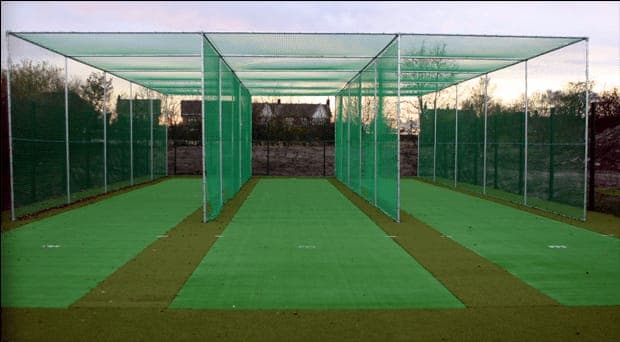
Nylon is more elastic and absorbs far more energy on impact, which is why it belongs anywhere the net has to arrest something rather than merely exclude it: rated fall-arrest netting, cricket practice lanes and intermediate catch nets in tall shafts. It costs several times as much per square metre, and specifying it for a pigeon net would be a waste.
Ultraviolet stabilisation must be in the polymer, not on it. A coated net looks the same in the showroom and degrades in a single strong summer.
Why mixing metals shortens the life of everything
Put a plain steel screw into an otherwise stainless assembly and you have created a galvanic cell. In the presence of moisture, the less noble metal corrodes preferentially and quickly, which is why a single cheap fastener can undermine an installation where the cable itself is faultless. In damp, poorly ventilated locations such as service shafts, this happens faster than most people expect.
The rule we work to is that fixings, terminations and hardware are matched to the cable grade rather than chosen separately on price. That is also why we avoid galvanised eye bolts and turnbuckles entirely on coastal work: galvanising is a sacrificial coating, and once it has gone the steel underneath has no protection at all.
Framing, ropes and the wear items
Aluminium framing for cable systems is normally powder-coated 6063-T6 extrusion, which carries the cable tension and gives a finished edge. Powder coating over properly pretreated alloy holds colour outdoors for years; the failures we see are almost always where pretreatment was skipped. In very hot inland cities such as Nagpur, thermal movement over long frame runs is a genuine design consideration rather than a formality.
For netting, the perimeter rope matters as much as the mesh, because it is what transfers load into the anchors instead of letting the outermost row of mesh tear. On drying systems, braided polyester rope is preferable to nylon because it stretches less when repeatedly wetted, which keeps rail heights consistent. Rope and pulleys are the designed wear items on any cloth hanger and should be treated as replaceable rather than permanent.
- Frame: powder-coated 6063-T6 aluminium, pretreated before coating
- Cable: 7x7 construction stainless, typically 2 mm to 3 mm for balcony work
- Net perimeter: bordered rope stitched around the full edge, not raw mesh laced to anchors
- Drying systems: braided polyester rope and sealed-bearing pulleys
304 in humid inland cities without coastal spray
Hyderabad, Bengaluru interior, Pune, and similar inland addresses often perform well on verified AISI 304 when balconies rinse occasionally and fasteners match grade. Humid monsoon without salt is different from chloride exposure — document environment on invoices so later owners understand grade choice.
Industrial zones with chemical fallout may justify 316 even inland — trait matters more than map labels alone.
316 when monsoon salt mist reaches mid floors
Towers near creeks, estuaries, or heavy coastal spray sometimes see salt on mid floors, not only penthouses. 316 at terminations and fasteners often outlast 304 when rinse cycles are irregular and AC mist concentrates salt on parapets.
316 is not immunity — neglected mixed-metal kits still fail; grade is one layer in a system.
HDPE versus nylon for terrace sun exposure
HDPE often handles UV on open terraces when stabiliser packages are specified; nylon may suit shaded ducts with different abrasion profile. Ask for twine diameter and knot type, not trade names alone — aperture derives from both.
Replace sun-aged polymer on a schedule tied to your exposure face, not a national average.
Frame alloys and thermal expansion matching
Aluminium frames expand faster than stainless cables — detail allows slip without scraping coat at anchors. Mismatch shows as tick marks in powder coat or clicks in wind before structural issues appear.
Specify frame alloy and coat system together when societies audit facade materials.
Fastener families that belong with SS304 cable runs
Match clips, screws, and turnbuckles to cable grade family — carbon-steel clips on stainless runs are a predictable failure mode within seasons on humid coasts. Buying should list fastener grade on the same line as cable grade, not assume installers will match automatically.
Isolation washers at aluminium interfaces belong in spec when manufacturers require them — skipping them saves little and stains much.
Polymer knot types and slippage under Indian sun load
Knot slippage shows as slow aperture growth before visible tears — know whether your panels use sewn borders, knotted borders, or hybrid corners. Maintenance replaces panels when slippage exceeds gauge tolerance, not only when holes appear.
Powder coat colour stability on sea-facing towers
Light colours chalk differently from dark on the same coat system — choose colour with UV expectations, not only matching window powder from a interior brochure.
Rope versus stainless perimeter on large terrace nets
Rope perimeters flex and are replaceable; stainless perimeters cost more upfront and behave differently under ball impact — match perimeter choice to primary hazard on that face.
Material traceability folder for your flat file
Keep invoice grade lines, sample photos of anchors and clips, polymer batch labels if provided, and handover spec — traceability folder supports warranty and resale without claiming certifications you were never promised. Update folder when panels replaced so polymer age is honest per panel ID.
When to step up from 304 to 316 on ambiguous microclimates
Step up when salt mist, industrial chloride fallout, persistent irrigation wetting, or failed 304 streaking appears within two monsoons on similar facing flats — environment trumps map inland labels. Step-up decisions should be written on change orders, not verbal afterthoughts.
Material guide closing: specs you can defend in committee
Defensible specs name grade, polymer type, aperture, fastener family, coat system, and replacement horizon — two thousand words of materials depth should end in those lines on your template.
Extended materials selection narrative for mixed Indian climates
Coastal humidity with salt mist pushes 316 at terminations and fastener isolation; inland humid monsoon without salt often sustains verified 304 when rinse and inspection happen; arid inland heat pushes thermal expansion planning on long runs and dark coats; industrial zones push earlier upgrade triggers when streaks cluster regardless of map label. Polymers on terraces need UV and chalk plans; polymers in ducts need abrasion and ventilation plans — same polymer word, different lifetimes. Mixing metals without isolation is a materials decision with safety consequences — not a install detail to “fix later”.
Materials capstone toward two thousand words of depth
Every materials paragraph should end in invoice lines: grade, polymer family, aperture, coat system, fastener family, replacement horizon. If those lines are blank, materials knowledge has not yet become purchase protection.
Two-thousand-word materials depth: invoice lines that matter
Invoice must carry AISI grade for stainless runs, polymer family and twine size for nets, coat system for frames, fastener family matching grade, and replacement horizon notes for sun-exposed polymers — if any line is missing, materials depth has not yet converted to purchase protection. Keep sample hardware photo in flat file — future maintainers inherit truth when invoices are lost.
Materials depth completion: from brochure metals to invoice discipline
Brochure metals become invoice discipline when AISI grades, polymer families, coat systems, and fastener families appear on signed specs — materials guide depth near two thousand words succeeds when those lines exist on your template, not when you remember a sales call adjective. Keep hardware photos with invoices in flat file — maintainers inherit truth when paper disappears.
Materials addendum toward ~2k words: keep invoice lines alive
Revisit invoice lines annually — grade, polymer, coat, fasteners — when maintainers replace parts; materials depth dies when replacements are untracked mix-ins. Approximately two thousand words of materials depth means invoice discipline, not metallurgy trivia — two thousand is approximate like all cornerstone targets.
Related questions
Does living near the sea change what I should install?
Substantially. Chloride in coastal air pits ordinary stainless, so we move to AISI 316 cable and use stainless fittings throughout, and we avoid galvanised hardware entirely. We also seal terminations and detail them so water drains away rather than sitting against the wall, because that is where coastal installations usually fail first.
How long should a safety net last?
A properly stabilised net in a moderate climate should give several years of service, and considerably longer where it is shaded. The way to judge it is by feel rather than by date: twine that has become stiff or chalky and snaps instead of stretching has reached the end of its life and should be replaced.
Can one net keep birds out and also stop a fall?
No, and treating them as interchangeable is the most common mistake we are called to correct. A light bird-exclusion mesh will not arrest a person or a heavy object. Where there is a genuine fall risk we specify a rated net with rated anchorage, which is a different product at a different price.
Services this applies to
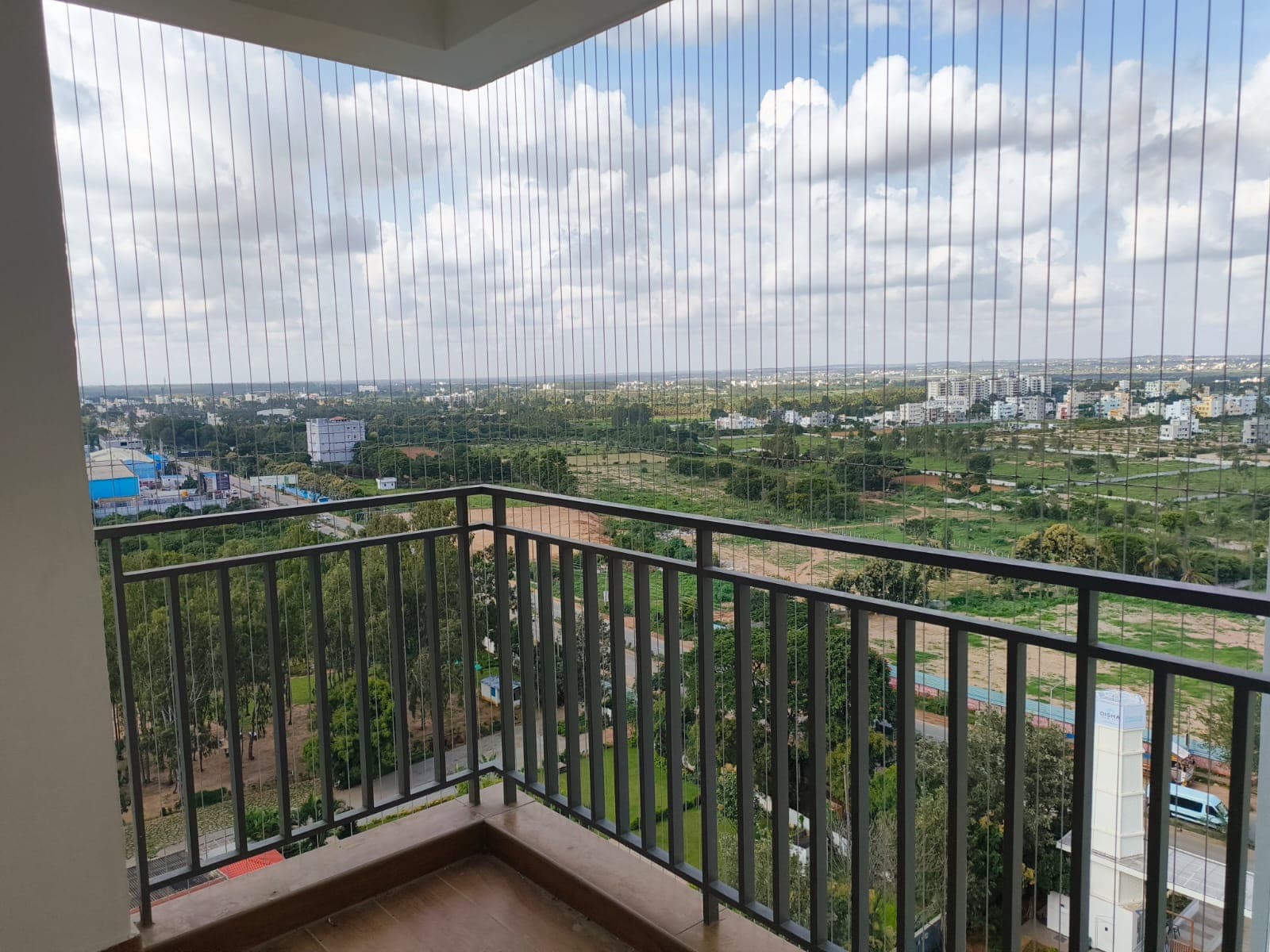
Invisible Grills
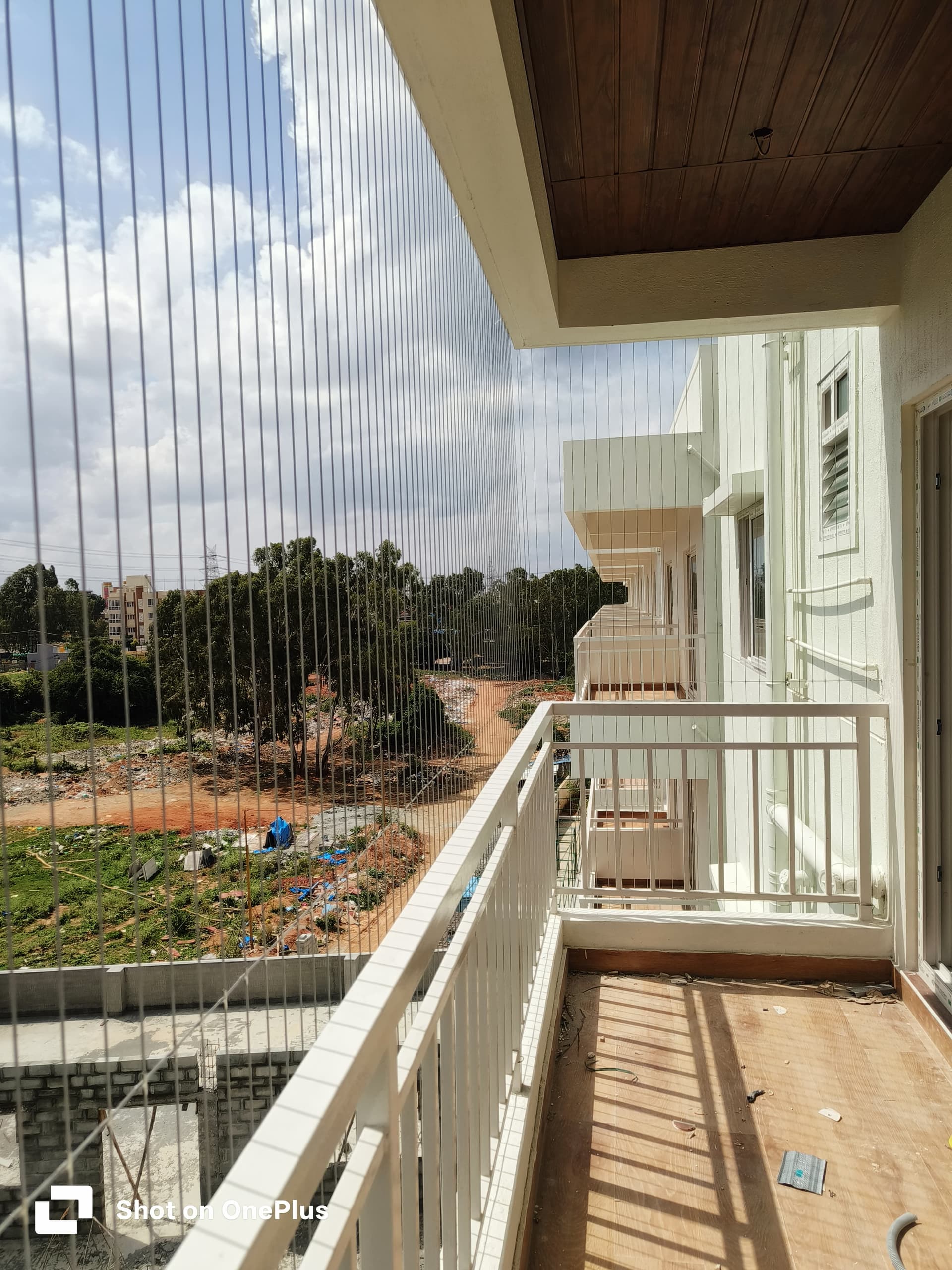
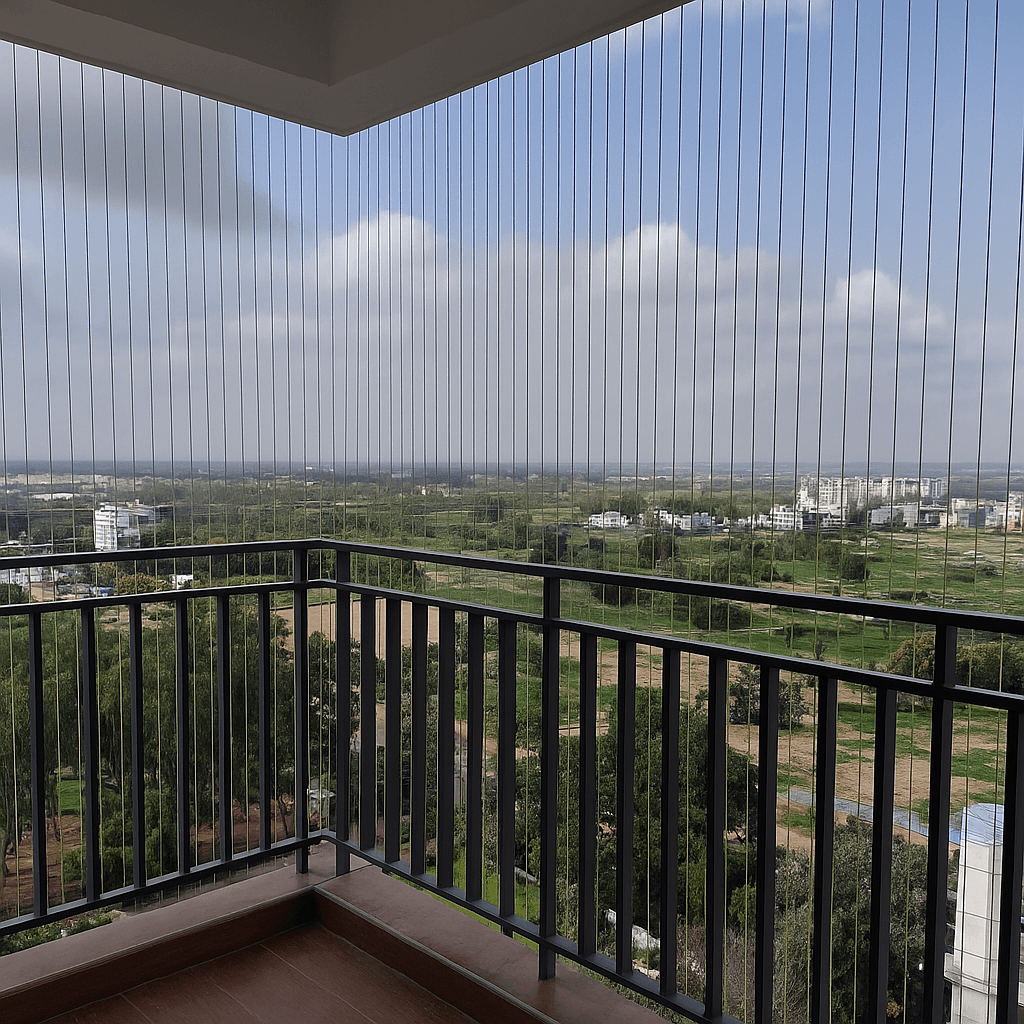
Tensioned stainless steel cable barriers that secure balconies and windows without blocking light, airflow or the view.
Safety Nets
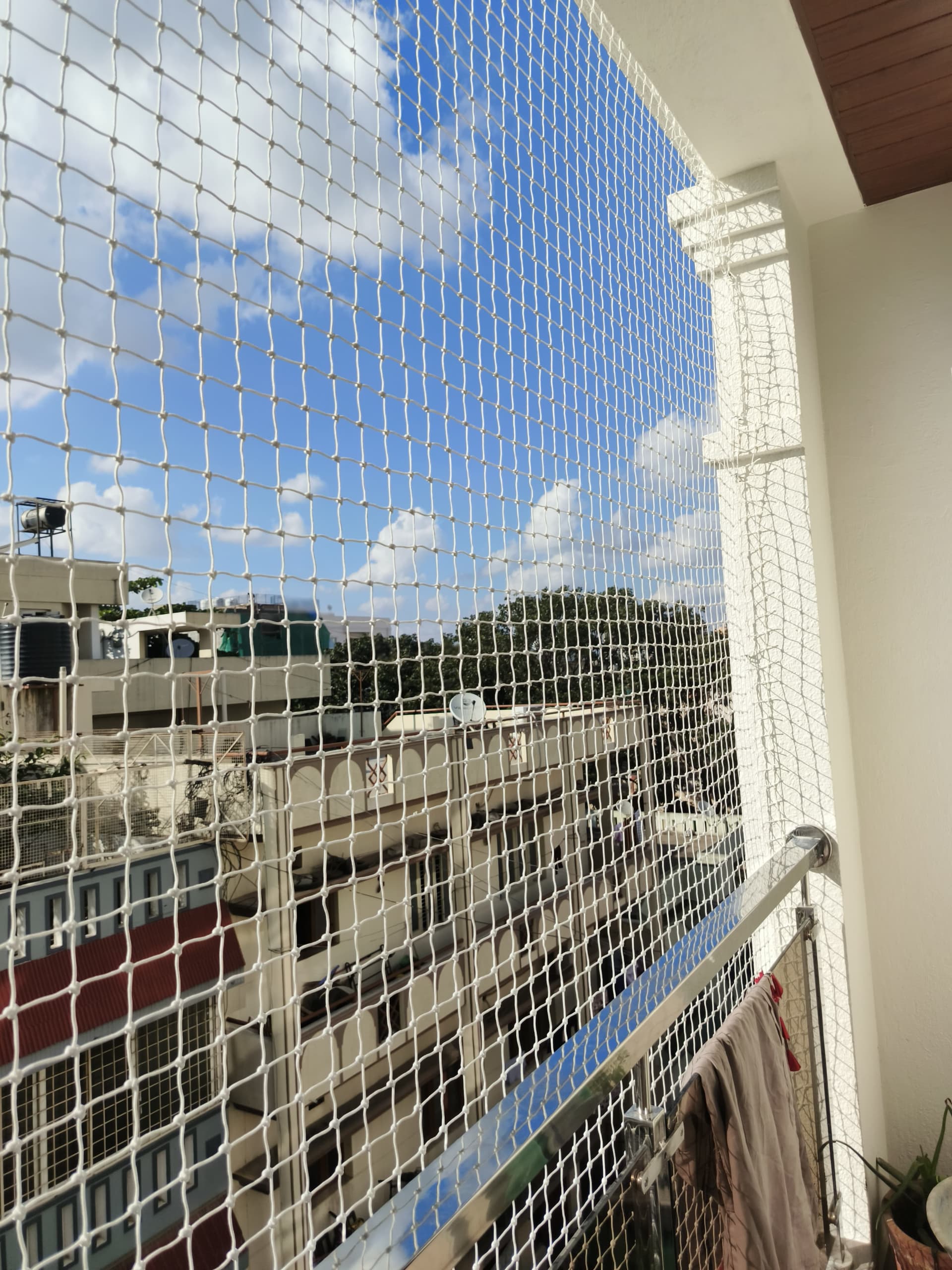
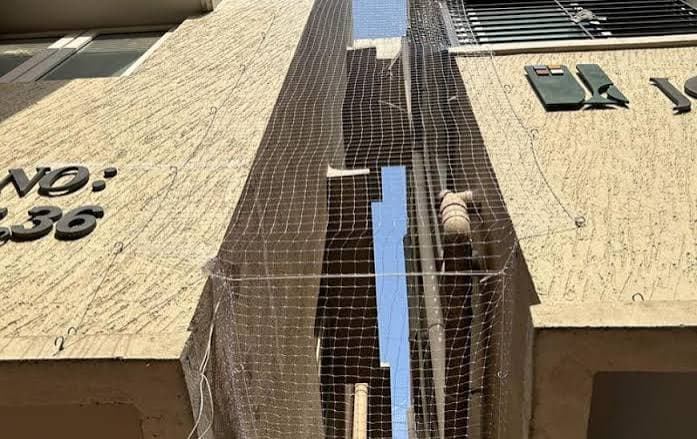
UV-stabilised knotted nets fitted to balconies, shafts and open edges to catch falling people, objects and birds.
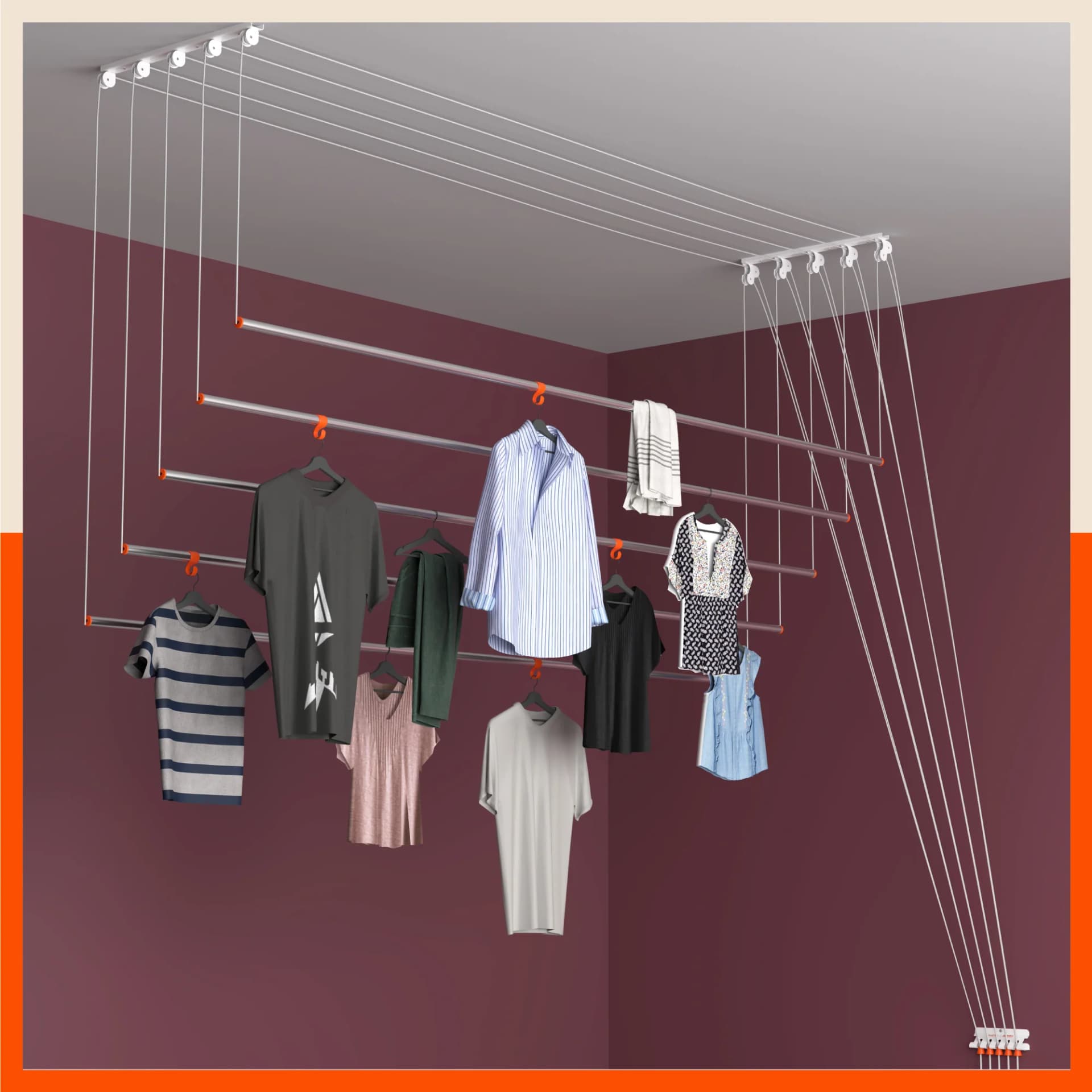
Cloth Hangers
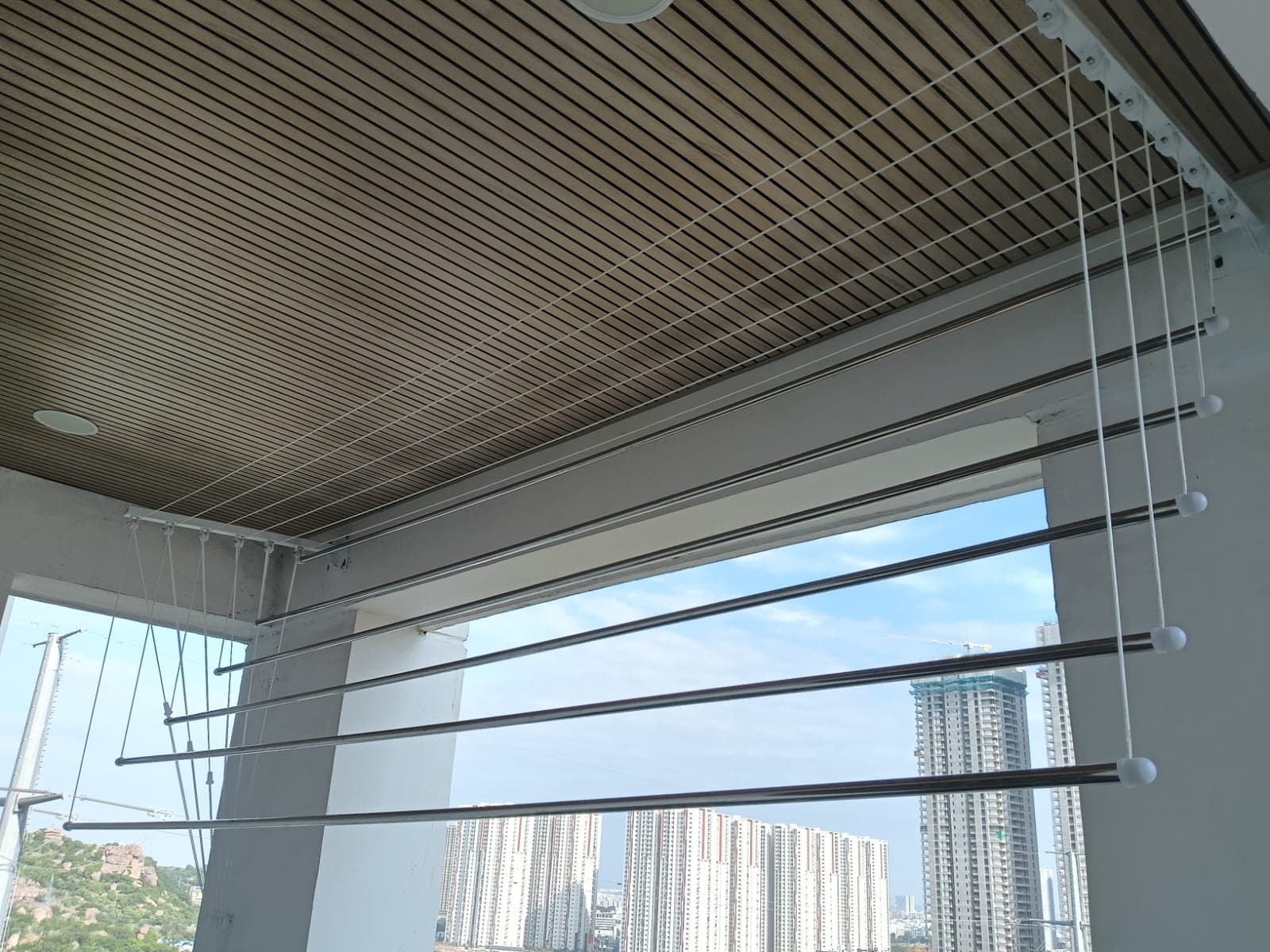
Ceiling-mounted pulley, wall-mounted retractable and telescopic drying systems sized to the balcony and the load.
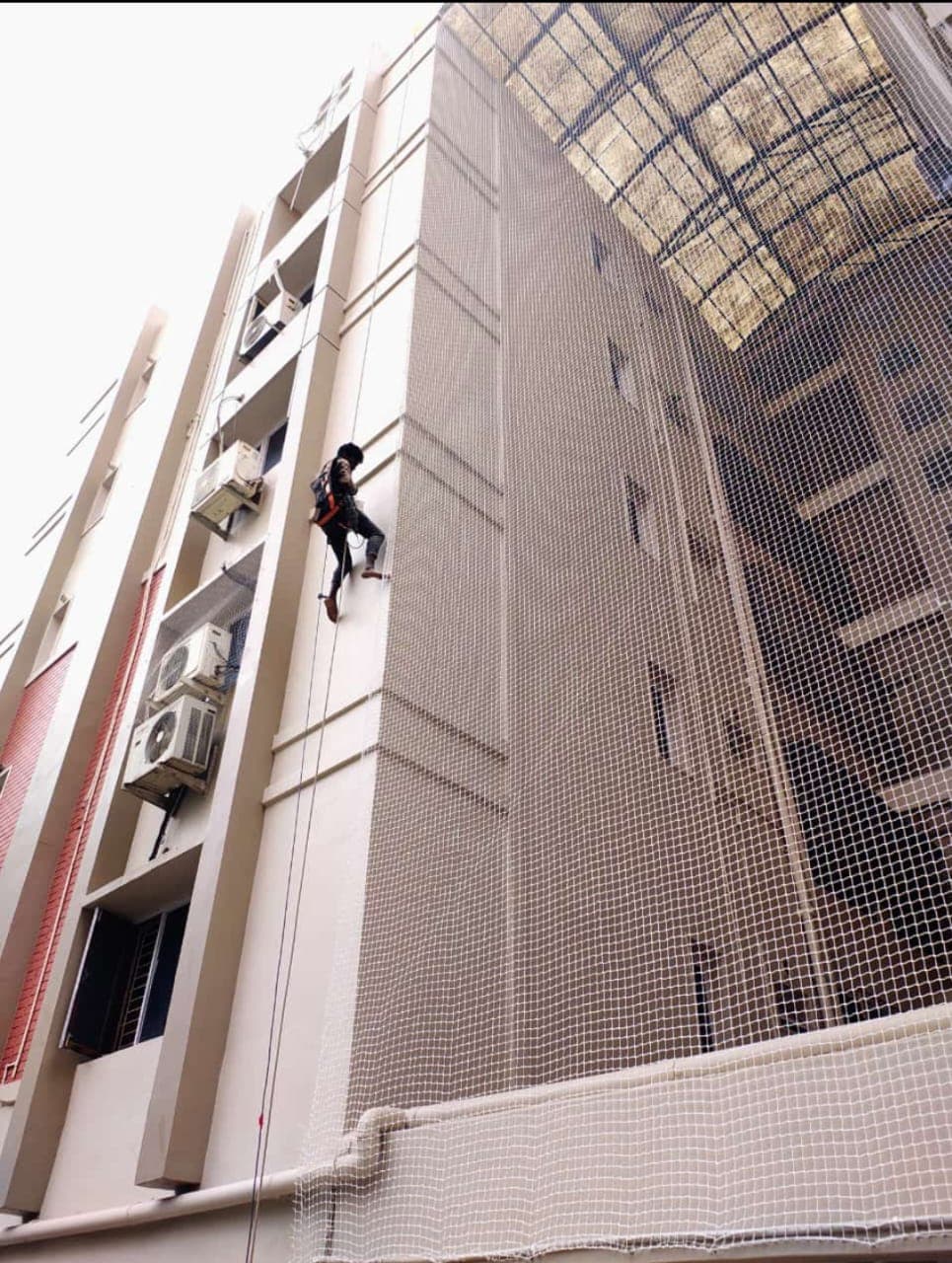
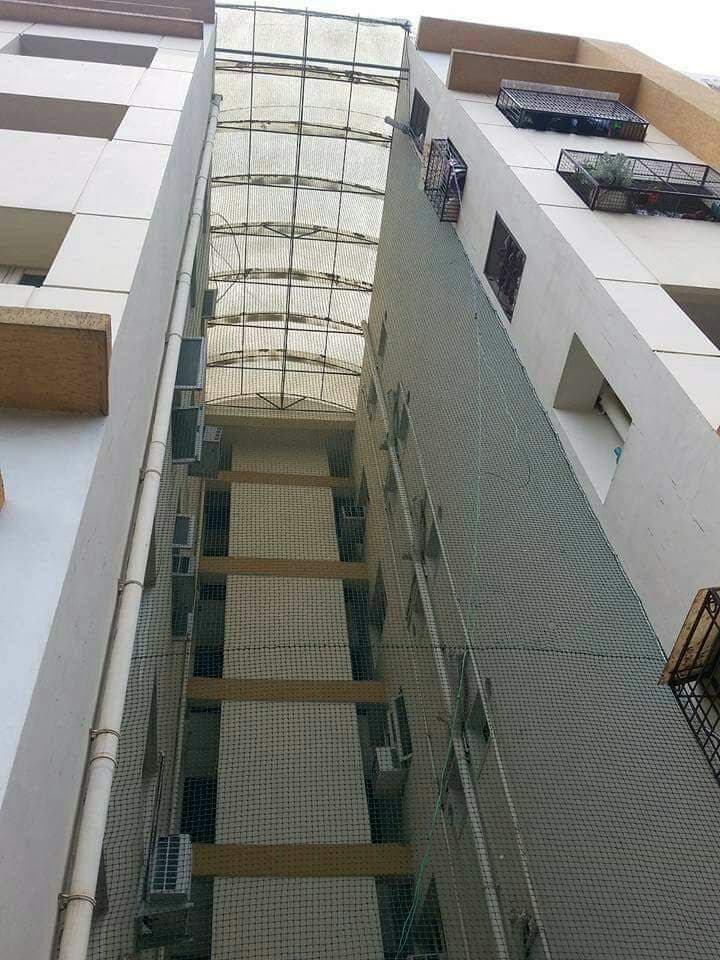
Duct Area Safety Nets
Nets fitted across service shafts and duct openings to stop falling objects, bird nesting and refuse accumulation.
Planned around your opening
Thoughtful fitting. A space that still feels like yours.
A balcony, a utility opening and a practice area each need a different approach. We consider how the space is used, where the fitting can be secured and how you will access it afterwards.
Materials chosen for the intended use
Cable grade, mesh denier, and hardware are named for the job — view, children, birds, or sports — not a generic pack.
A plan for edges, corners and access
Fixing surfaces, returns, and how you will open or clean the space are decided before anyone starts drilling.
Clear fitting scope before work begins
The written quote lists measured openings, included labour, and exclusions so you can compare vendors fairly.
How it works
Typical installation path
- 1
Share photo
City + opening photo is enough to start
 2
2Site survey
Measure openings and check fixing surface
 3
3Written quote
Grade, spacing, and scope in writing
 4
4Install & hand over
Fit, tension check, and walkthrough
Pricing that stays honest
How safety quotes are built in your city
We do not publish a fake national ₹/sq ft band that pretends every balcony is the same. Instead you get unit clarity, a quote checklist, and a photo estimate path — so you can compare any vendor (including us) without guessing.
Measured size and shape
Width, height, returns, corners, and irregular edges decide quantity. Photos help shortlist; survey locks the number.
Purpose and material
Child spacing, bird mesh, monkey-grade denier, and coastal 316 cable are different specs — not one generic “safety product”.
Access and fixing surface
Floor height, scaffold or gondola, railing type, and concrete vs metal change labour and hardware even at the same area.

Finish and aftercare
Edge finishing, colour match, tension checks, warranty visits, and what must appear on the written quotation before install day.
Price units by system (ask for the unit first)
Clearer units than a thin four-card price band — so quotes stay comparable.
| System | Typical unit | Must be named on the quote |
|---|---|---|
| Invisible grills | Usually by fitted opening area (or bay count) | Cable grade (304/316), spacing, frame finish, openable bays |
| Balcony / child safety nets | Usually by fitted mesh area | Denier/UV grade, aperture, border rope, return sides |
| Transparent / low-vis nets | Usually by fitted mesh area | Strand colour, denier, mesh size, edge treatment |
| Pigeon / anti-bird nets | Usually by covered opening area | Full-opening vs ledge-only, mesh size, duct returns |
| Bird spikes | Usually by running length of ledge | Base material, glue vs screw fix, bird species pressure |
| Monkey-grade nets | Usually by fitted area + reinforcement extras | Denier, corner plates, pull-tested anchors |
| Sports / cricket nets | By lane size or panel set | Impact rating, posts, shared-terrace rules |
| Cloth hangers | By system (rails/lines), not balcony sq ft | Ceiling vs wall, pulley count, stainless grade |
Written-quote checklist (use this on every vendor)
- 1Price unit stated (₹/sq ft of fitted area, per bay, per running metre, or per system)
- 2Measured openings listed bay by bay (W × H), not one guessed room total
- 3Material grade named (e.g. SS 304/316 cable, UV HDPE denier) — not only “stainless”
- 4Spacing or mesh aperture written in mm or inches
- 5Access notes (floor, scaffold/cradle, society time window)
- 6Inclusions: labour, hardware, finishing, GST line, warranty duration
- 7Exclusions: civil make-good, painting, association fees, remobilisation
- 8Minimum job charge (if any) shown separately from unit rate
Full depth: pricing guide · compare systems
Photo estimate
Send a photo from your city for a local estimate
One wide shot + a close-up of the fixing surface is enough to shortlist the system and outline what your written quote should include. Firm totals follow survey.
Photo → WhatsApp estimate
Send a clear photo of the opening in your city
One wide shot and a close-up of the fixing surface are enough to confirm coverage, suggest the right system, and outline what should appear on a written quotation before you book a survey. Firm totals still follow measurement on site.
- ✓ City / PIN in the message
- ✓ Priority: kids, birds, view, or monkeys
- ✓ Rough width × height if known
- ✓ Floor / society access notes
Photo estimate
Send a clear photo of the opening
WhatsApp a balcony, window, or duct photo with your city. We reply with the system options that fit and what a written quote should include — no rate-card guesswork.