
Duct Area Safety Nets
Coverage for shafts, ventilation spaces and utility openings where birds enter.
Premium Invisible Grills & Safety Nets across South & West India.
Service
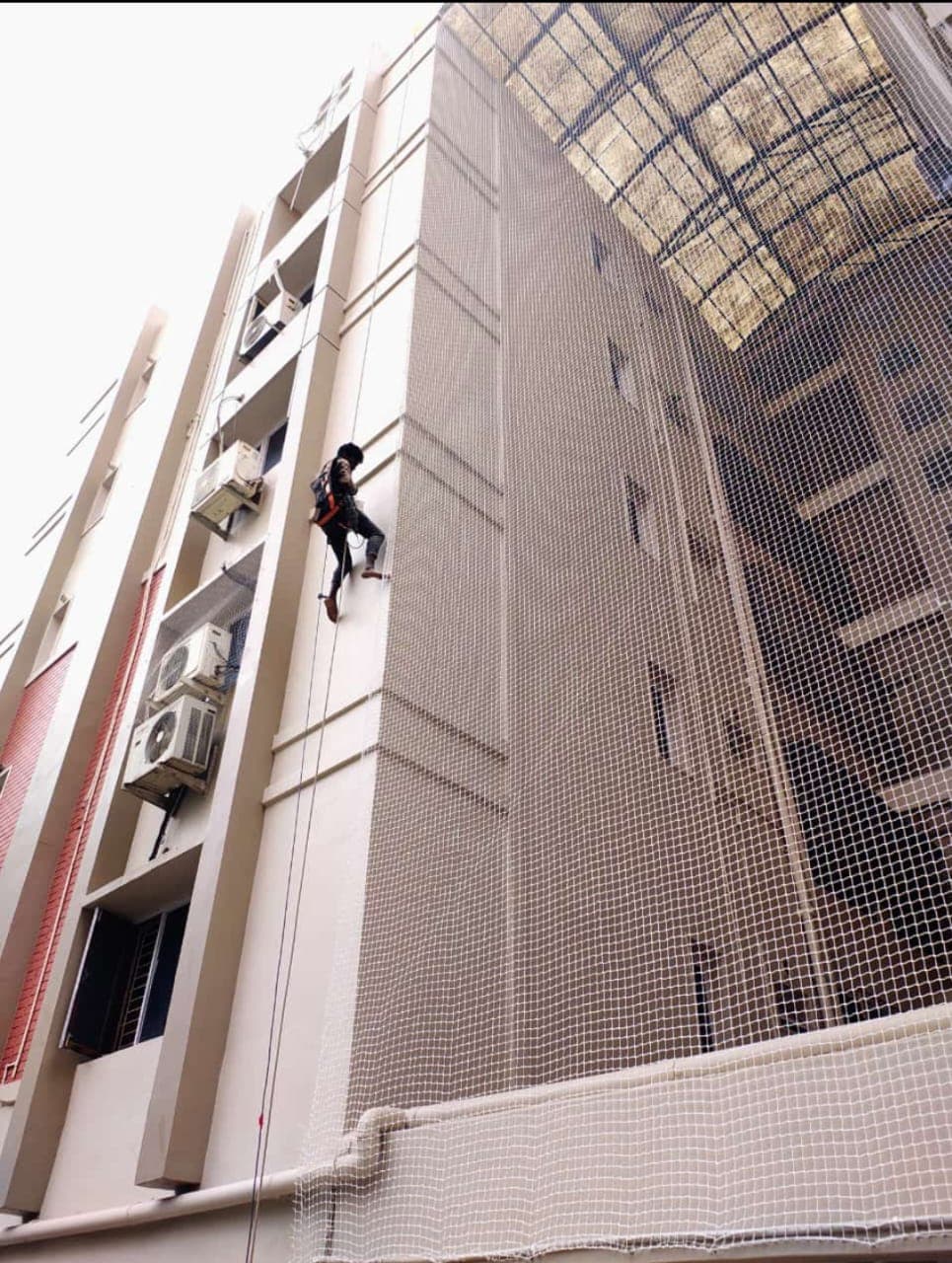
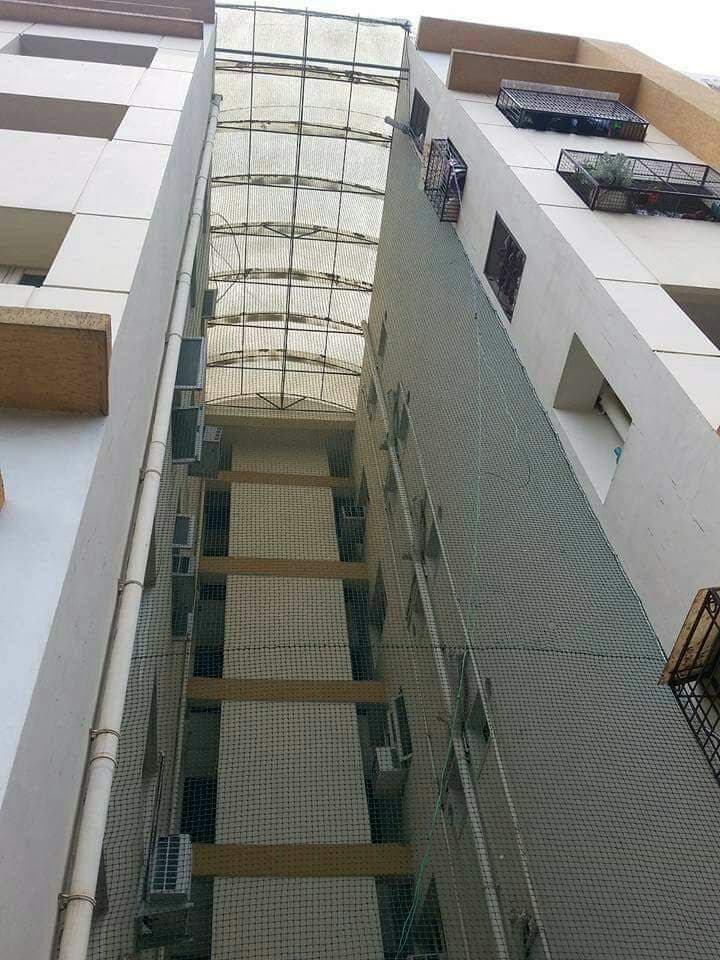
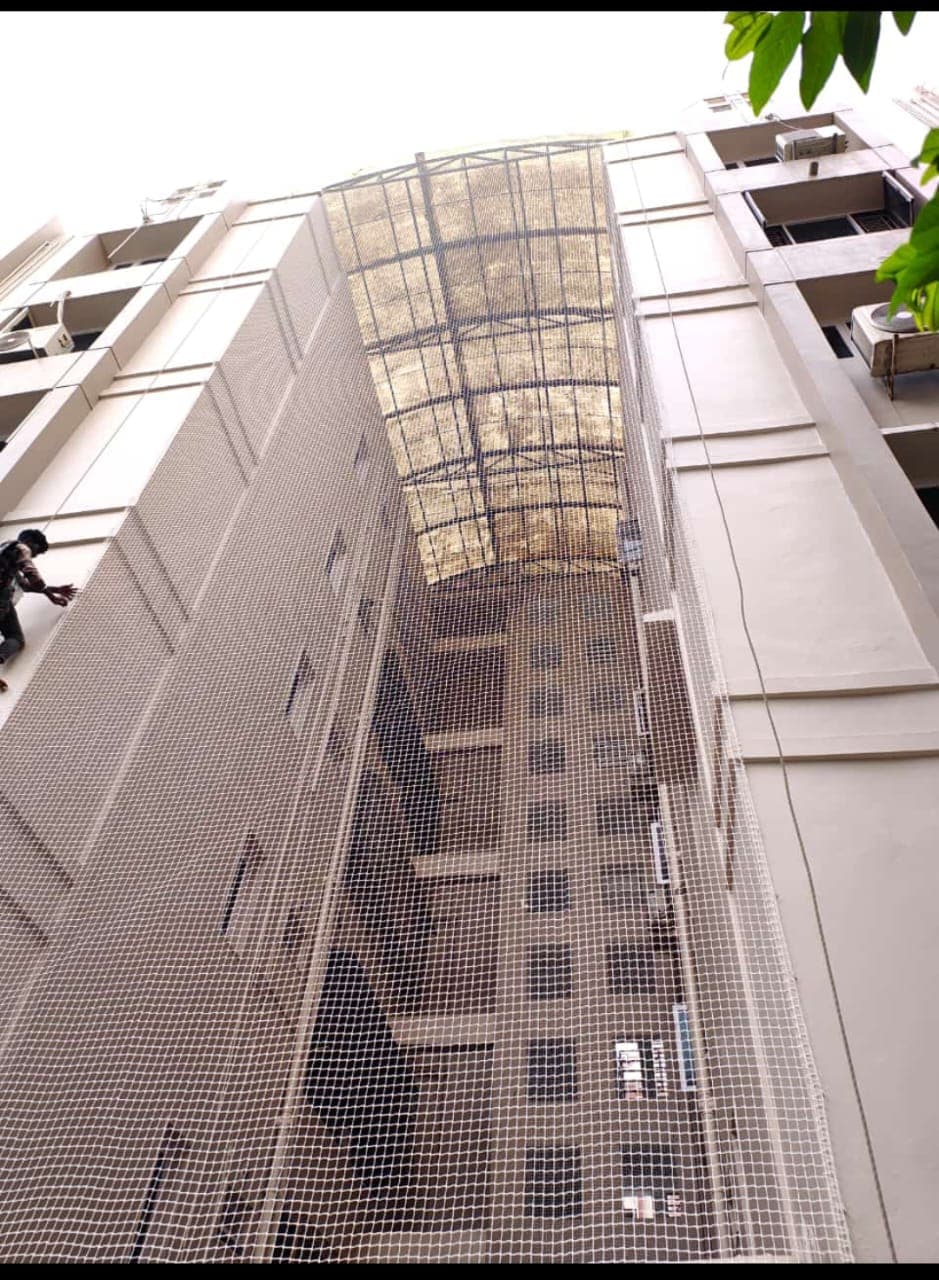
The service duct is the part of an apartment building nobody looks at until something goes wrong in it. These shafts run the full height of the block, they are the natural roosting site for pigeons, and anything dropped or thrown into them falls the whole way to a floor where somebody has to retrieve it. A net at the head of the shaft, with intermediate nets where the shaft is tall, solves all three problems at once. The work is more about safe access and honest anchorage than about the netting itself.

Photo → WhatsApp estimate
One wide shot and a close-up of the fixing surface are enough to confirm coverage, suggest the right system, and outline what should appear on a written quotation before you book a survey. Firm totals still follow measurement on site.
01
Send a clear photo, your city, and whether the priority is children, pets, birds, visibility, or sports use.
02
We confirm dimensions, fixing surfaces, access, and how the space is used day to day.
03
Review material grade, spacing, included installation, warranty terms, and the price unit in writing.
04
Fit the chosen system, check edges and tension, and walk through basic care before handover.
overview
The service duct is the part of an apartment building nobody looks at until something goes wrong in it. These shafts run the full height of the block, they are the natural roosting site for pigeons, and anything dropped or thrown into them falls the whole way to a floor where somebody has to retrieve it. A net at the head of the shaft, with intermediate nets where the shaft is tall, solves all three problems at once. The work is more about safe access and honest anchorage than about the netting itself.
Prevents objects falling the height of a service shaft and stops birds nesting in ducts where they cannot be cleaned out.
benefits
features

applications
materials
| Material | Specification | Why it matters |
|---|---|---|
| HDPE duct netting | UV-stabilised HDPE, 1.2 mm to 2 mm twine, knotted | Chosen for its stability where a net will be left in place for years with little inspection, as duct nets always are. |
| Nylon catch netting | Braided nylon, higher denier, for intermediate catch layers | Where the net must arrest a genuinely heavy falling object, nylon's ability to absorb energy is what is needed. |
| Stainless anchorage | AISI 304 eye bolts, turnbuckles and border rope | Shafts are damp and poorly ventilated, so stainless is used throughout rather than galvanised hardware. |

installation
This is survey-led work. A typical job takes 4 to 16 hours on site once the specification is settled.
Shaft survey and access plan
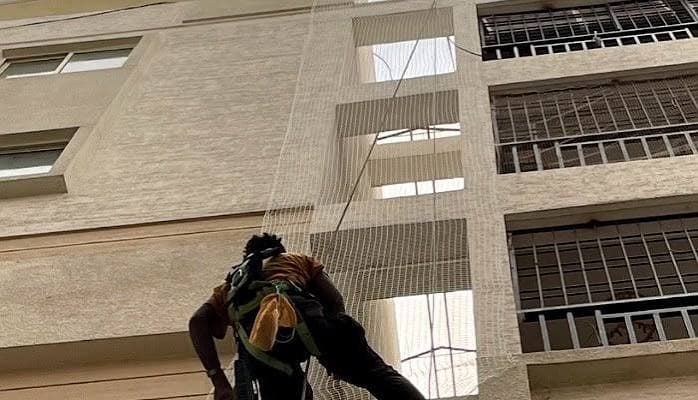
Shaft dimensions, wall construction and safe access are established first; this is confined, at-height work.
Clearing existing nesting and debris
The shaft is cleared before enclosure, since netting over an existing nest traps the problem instead of solving it.
Anchor installation
Eye bolts are set into sound structural wall at a spacing that keeps the border rope taut across the span.
Net fitting and tensioning
Panels are laced and tensioned so no belly forms, with corners closed tightly against the shaft wall.
Access panel and handover
Serviceable access sections are formed and shown to the facilities team so future entry does not damage the net.

safety

maintenance
We recommend an inspection every 12 months. Most of it is straightforward enough to do yourself.

quality
This product carries a 3-year warranty on materials and workmanship, on the basis that the recommended inspection is carried out.
pricingFactors
We do not publish a rate per square foot, because the same area can differ in price by a factor of two depending on grade, spacing and access. Every quotation states these explicitly.
More ways to make your space work
Start with the job the opening needs to do. Each page keeps its own specification notes — not a copied national paragraph.
Coverage for shafts, ventilation spaces and utility openings where birds enter.
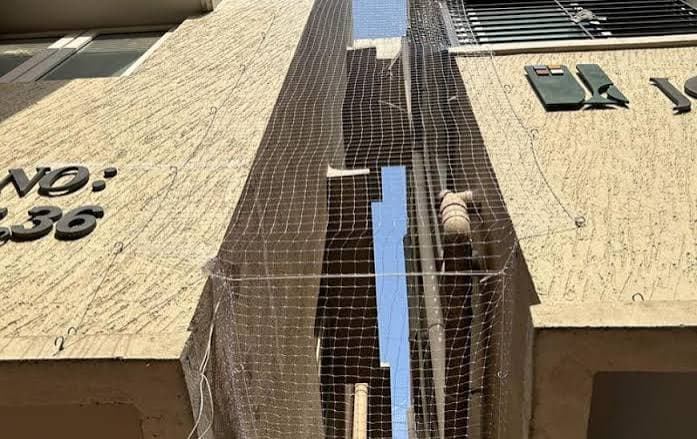
Nets fitted across service shafts and duct openings to stop falling objects, bird nesting and refuse accumulation.
Coverage for shafts, ventilation spaces and utility openings where birds enter.
Coverage for shafts, ventilation spaces and utility openings where birds enter.
Coverage for shafts, ventilation spaces and utility openings where birds enter.
Planned around your opening
A balcony, a window and a utility opening each need a different duct area nets approach. We consider how you use the space, where the fitting can be secured, and how you will access it afterwards.
Nothing falls the full height
Objects dropped into the shaft are caught at the nearest net rather than landing many floors below.
Ends bird nesting in the shaft
Closing the shaft head denies access outright, which is the only reliable way to stop roosting in a space nobody can clean.
Cuts recurring cleaning cost
Refuse and droppings stop accumulating at the shaft base, removing a job that facilities teams otherwise repeat every year.
It needs attention but rarely means replacement. Slack in a cable widens the gap under load, which is the thing a barrier exists to prevent, and slack in a net lets it whip and abrade against fixings. Both are usually corrected by re-tensioning at the existing hardware, which is a short visit rather than a new installation.
Sometimes. Moving from 316 to 304 stainless is a genuine saving and perfectly sound at an inland address, and a coarser mesh is fine if you only need to keep birds out. What we will not do is reduce cable spacing tolerance or anchor quality, because those are the two things that decide whether the installation actually holds.
For anything structural we do, yes. We can give an indicative range over the phone from your balcony dimensions, but the final price depends on the condition of the wall or slab we are fixing into, the access route for materials, and the exact spacing you need. A survey takes about twenty minutes and means the quotation we give you is the price you pay.
Once a year is right for most installations, and it is largely something you can do yourself: press the cables or net at mid-span to feel for slack, look at the anchor points for rust weeping or hairline cracking, and wash the surfaces down. In coastal and cyclone-exposed locations we recommend an additional check after the wet season.
Only if the enclosure was left with a gap, which in practice means a corner or a service penetration that was not properly closed. A correctly fitted net denies access outright. That is why we clear existing nesting material first and check corners and pipe penetrations last, since those are where birds actually get through.
Almost always because the specifications are different, even when the dimensions are identical. Cable grade, cable spacing, net polymer and the type of anchor used all change the cost substantially and none of them are visible in a photograph. When comparing quotations, check the stated grade and spacing rather than the total alone.
We deliberately do not, because a single rate would be misleading. The same area costs very different amounts depending on the grade of hardware, the spacing you need, the height you are working at and the condition of the substrate. Our pricing guide sets out every factor that moves the number so you can see how a quotation is built up.
Warranty depends on the product, and the figure for each one is stated on its service page rather than promised generically here. In every case the warranty covers materials and workmanship on what we installed, and it assumes the yearly inspection is carried out. We will always tell you what is and is not covered before you commit.
Clearing is quoted separately because the volume varies enormously, but it is not optional. Netting over an existing nest traps the problem instead of solving it and is inhumane besides. We clear and photograph the shaft before any panel goes in, and agree disposal arrangements with the building management first.
Access has to be designed in from the start, which is why we form laced access panels at agreed positions and record where they are for the facilities team. A net with no access provision gets cut open the first time the riser needs work and is never repaired, which defeats the whole installation.
We cover the localities listed on our service area pages, and those lists reflect where we genuinely operate rather than everywhere we would like to. If your locality is not listed, call us anyway: we often work just beyond a listed boundary, and we will tell you plainly if a job is outside our reach rather than sending someone unprepared.
A properly stabilised net in a moderate climate should give several years of service, and considerably longer where it is shaded. The way to judge it is by feel rather than by date: twine that has become stiff or chalky and snaps instead of stretching has reached the end of its life and should be replaced.
Our work
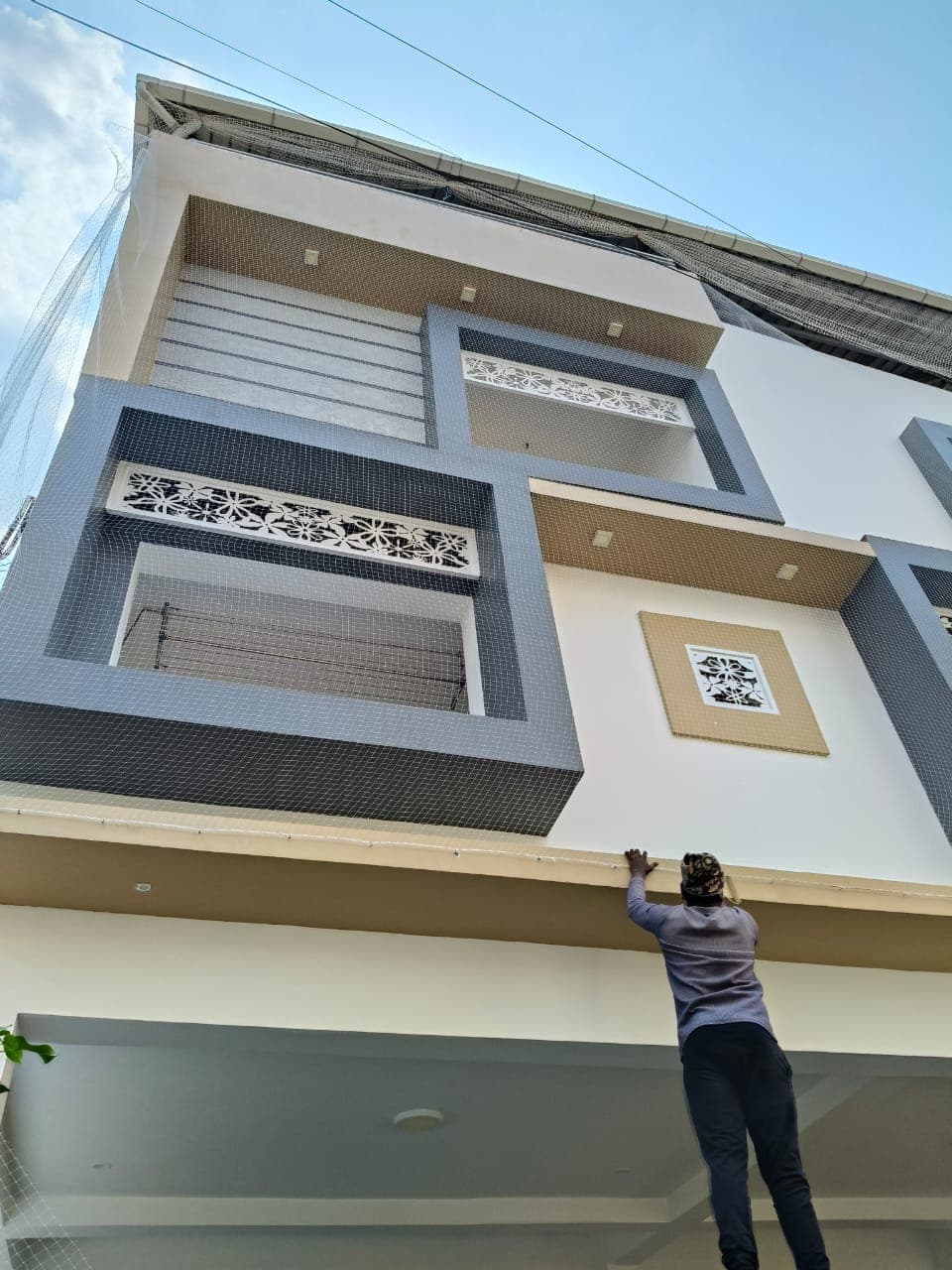
Installation photography from comparable openings — used to judge finish quality before you book a survey.
Photo estimate
Share your city and a clear photo of the opening. We reply with the right system options and what a written quote should include.
Service areas
Pick your city for climate-specific notes and local installation guidance — not one metro paragraph reused nationwide.
Each link is its own hub page with unique content, then the same state ladder.
Explore more
Continue this service, compare nearby locations, or open a buyer guide — every cluster is unique to this page.
2 sections
2 sections
1 sections
1 sections
1 sections
1 sections
Conversion
Send a photo, book a callback, or call the team — we reply with the right system options for your opening.